
NASA Luncurkan Teleskop Roman, Awasi Asteroid Apophis, dan Temukan Tanda Kehidupan di Mars

Suara Pecari – 24 April 2026 | NASA announced several milestones this week, including the upcoming launch of the Nancy Grace Roman Space Telescope and a precise date for asteroid Apophis’s close approach. The agency also reported potential signs of life on Mars and addressed a misinformation incident involving a Hollywood actor.
The Roman Telescope, named after NASA’s first chief astronomer, has completed construction and is scheduled for launch from Kennedy Space Center in early September 2026. The observatory features a 2.4‑meter primary mirror and a field of view 100 times wider than Hubble, enabling surveys of the sky 200 times faster.
Administrator Jared Isaacman highlighted that the new telescope will map dark energy, trace cosmic expansion, and search for thousands of exoplanets, delivering up to 1.4 terabytes of data per day. Dr. Nicky Fox described the mission as a ‘data power plant’ that will outpace Hubble’s three‑decade record.
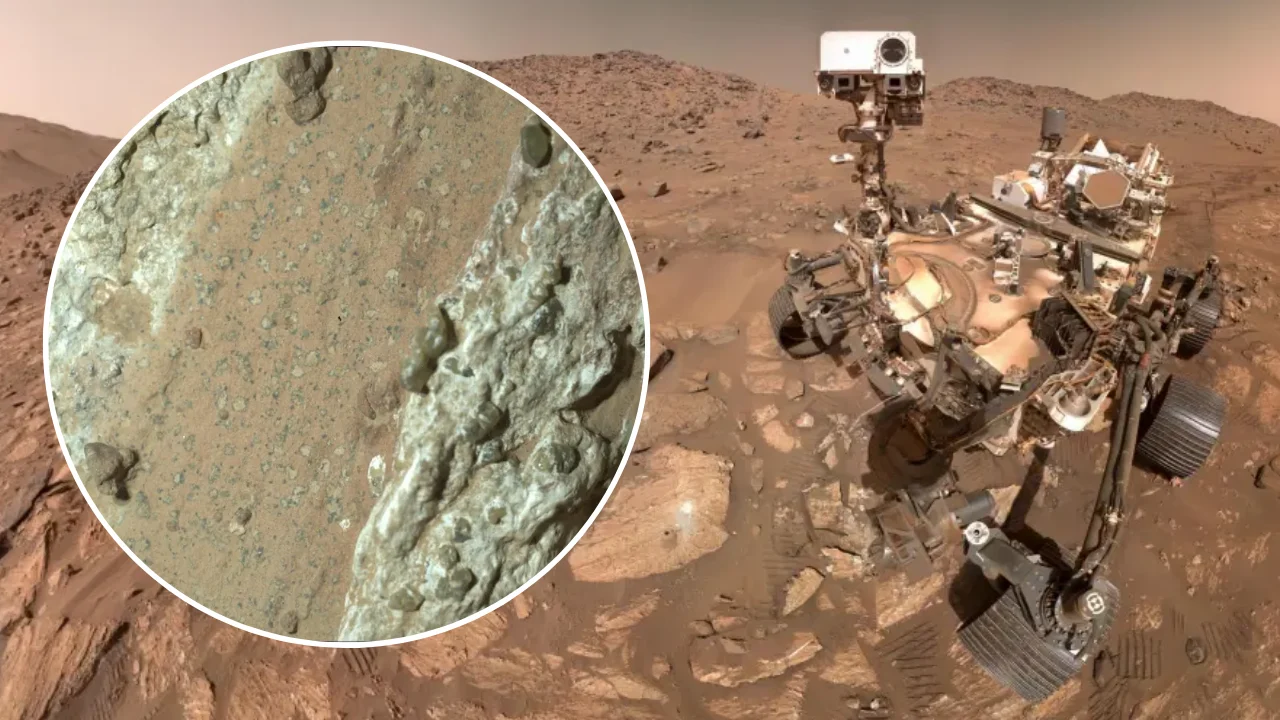
Meanwhile, NASA’s Perseverance rover reported an unexpected geological pattern on the Jezero crater floor that resembles scaled dragon skin. Scientists said the formation could be the result of ancient sedimentary processes, but they are cautious to avoid sensational interpretations.
In a separate study, microbiologists identified a resilient fungal species capable of surviving Mars‑like conditions, raising the possibility that Earth microbes could inadvertently colonize the Red Planet. The organism was isolated from a terrestrial desert and demonstrated growth after exposure to simulated Martian temperature and pressure.
NASA warned that strict planetary protection protocols will be enforced on future missions to prevent forward contamination. The agency stresses that any breach could jeopardize future astrobiology studies.
The agency also confirmed the exact date of the close approach of asteroid 99942 Apophis, nicknamed ‘God of Chaos’. The near‑Earth object will pass within 20,000 miles of the planet on 13 April 2029, visible to the naked eye for several hours.
Apophis, roughly 1,230 feet across, was first discovered in 2004 and once carried a 2.7 % impact probability. Updated radar observations in 2021 eliminated the collision risk for at least a century, allowing scientists to study its trajectory without immediate danger.
Astronomers plan to use the upcoming Roman Telescope and ground‑based facilities to monitor Apophis during the flyby, hoping to refine its mass and composition. The event will also provide a rare opportunity to test planetary defense techniques in a real‑world scenario.
The week also saw a viral social media post misidentifying actor Tom Hardy, known for ‘Mad Max: Fury Road’, as a NASA astronaut. NASA’s public affairs office clarified that the image was unrelated to any spaceflight program and urged the public to verify information before sharing.
Experts noted that such misinformation can distract from genuine scientific achievements and undermine public trust in space agencies. They recommended media literacy campaigns to counter false claims.
Overall, NASA’s 2026 agenda showcases a blend of cutting‑edge exploration, rigorous safety measures, and public outreach, underscoring the agency’s role in advancing knowledge while safeguarding the integrity of space research. The initiatives reflect a commitment to scientific excellence and responsible stewardship of the cosmos.







Tinggalkan Balasan
Anda harus masuk untuk berkomentar.