
Trump Umumkan Gencatan Senjata 10 Hari antara Israel dan Lebanon

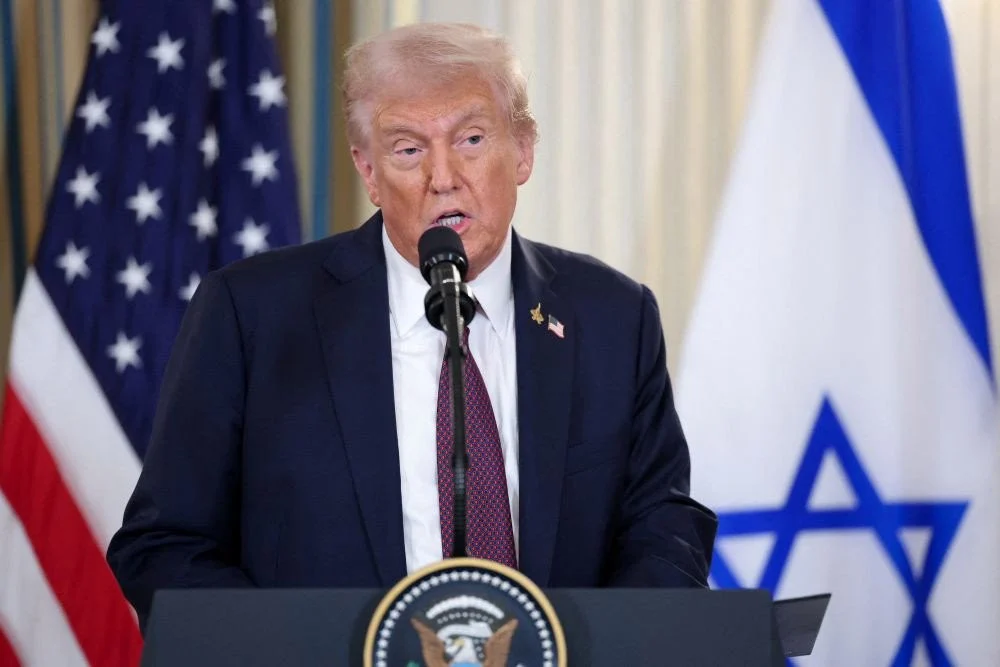
Suara Pecari – 17 April 2026 | President Donald Trump announced that Israel and Lebanon have agreed to a ten‑day ceasefire, set to begin at midnight local time on Thursday. The declaration was posted on Trump’s Truth Social platform early Friday.
In his statement, Trump said he had just completed a “very productive” conversation with Israeli Prime Minister Benjamin Netanyahu and Lebanese President Joseph Aoun. He added that the two leaders would be the first from their respective countries to meet face‑to‑face in 34 years.
The ceasefire will start at 17:00 Eastern Standard Time, which corresponds to 21:00 GMT or 02:00 Western Indonesian Time on Friday. The agreement calls for an immediate halt to artillery, air strikes and cross‑border incursions for the next ten days.
Trump said he instructed Vice President JD Vance, Secretary of State Marco Rubio and Chairman of the Joint Chiefs Dan Caine to coordinate with both governments to ensure the truce is respected. He emphasized that the United States will continue to work with regional partners to achieve a lasting peace.
Lebanese Prime Minister Nawaf Salam welcomed the ceasefire, describing it as the “primary demand of Lebanon since the conflict began.” He expressed gratitude to the United States and to regional allies including France, the European Union, Saudi Arabia, Egypt, Qatar and Jordan for their diplomatic support.
Israeli officials, however, voiced mixed reactions to the U.S.-led initiative. Some senior ministers expressed concern that the pause might advantage Hezbollah forces still active in southern Lebanon.
Hezbollah, the Lebanon‑based militant group, was not represented at the Washington talks that led to the agreement. The organization publicly rejected the ceasefire, insisting that any settlement must address its security concerns.
The negotiations took place in Washington on April 14, after weeks of intensified cross‑border fighting that caused civilian casualties on both sides. Damage reports from the town of Salim in the Nabatieh governorate indicated widespread destruction of homes and vehicles.
Trump claimed the ceasefire would be his tenth successful effort to end a war, joining his previous interventions in the Middle East, Africa and Eastern Europe. He framed the development as a step toward a “permanent peace” between Israel and Lebanon.
The United States deployed additional diplomatic staff to the region to monitor compliance and to facilitate humanitarian aid delivery. Aid agencies reported that the pause could allow safe corridors for medical supplies and displaced families.
International observers noted that the ten‑day window is short but could provide a critical breathing space for confidence‑building measures. They urged both parties to use the time to negotiate longer‑term arrangements on border demarcation and prisoner exchanges.
The announcement arrived amid heightened tensions in the broader Middle East, where other conflicts continue to draw global attention. Analysts warned that any breach of the truce could quickly reignite hostilities along the volatile Israel‑Lebanon frontier.
U.S. officials indicated that the ceasefire will be monitored through satellite imagery, intelligence sharing and on‑the‑ground liaison officers. Violations will be reported to the United Nations Interim Force in Lebanon for possible intervention.
Lebanese President Joseph Aoun praised the agreement as a “historic step” toward stability for his nation. He urged the Lebanese parliament to ratify the truce and to support reconstruction efforts in the south.
Netanyahu thanked the United States for its “unwavering support” and reiterated Israel’s commitment to security while respecting the ceasefire terms. He also called for a rapid resumption of diplomatic talks on final status issues.
The ceasefire is scheduled to expire on the night of April 24, unless both sides agree to extend it. Both governments have signaled willingness to discuss an extension based on the situation on the ground.
Humanitarian organizations prepared to mobilize trucks and field hospitals once the fighting stops. They highlighted that access to basic services such as water, electricity and medical care remains severely limited in affected areas.
The regional diplomatic community, including the Arab League and the European Union, welcomed the development as a positive sign for de‑escalation. They called for continued engagement to address the root causes of the conflict.
Critics in both Israel and Lebanon questioned the durability of a ceasefire brokered primarily by a foreign power. Some legislators argued that sustainable peace requires a comprehensive political solution, not just a temporary pause.
Despite the skepticism, the ten‑day truce offers an immediate reduction in violence and a chance for civilian populations to recover. Observers will watch closely whether the pause can be transformed into a broader framework for peace.
The United Nations has urged all parties to respect the terms of the agreement and to avoid any actions that could jeopardize the fragile calm. A special envoy will report back to the UN Security Council next week.
In summary, the Trump‑mediated ceasefire marks a notable diplomatic moment, bringing together Israel’s Netanyahu and Lebanon’s Aoun after more than three decades. The next ten days will test the commitment of both sides and the effectiveness of U.S. facilitation.






Tinggalkan Balasan
Anda harus masuk untuk berkomentar.