
Tekanan Mobil Listrik China Guncang Produsen Jepang di Tengah Pelemahan Daya Beli

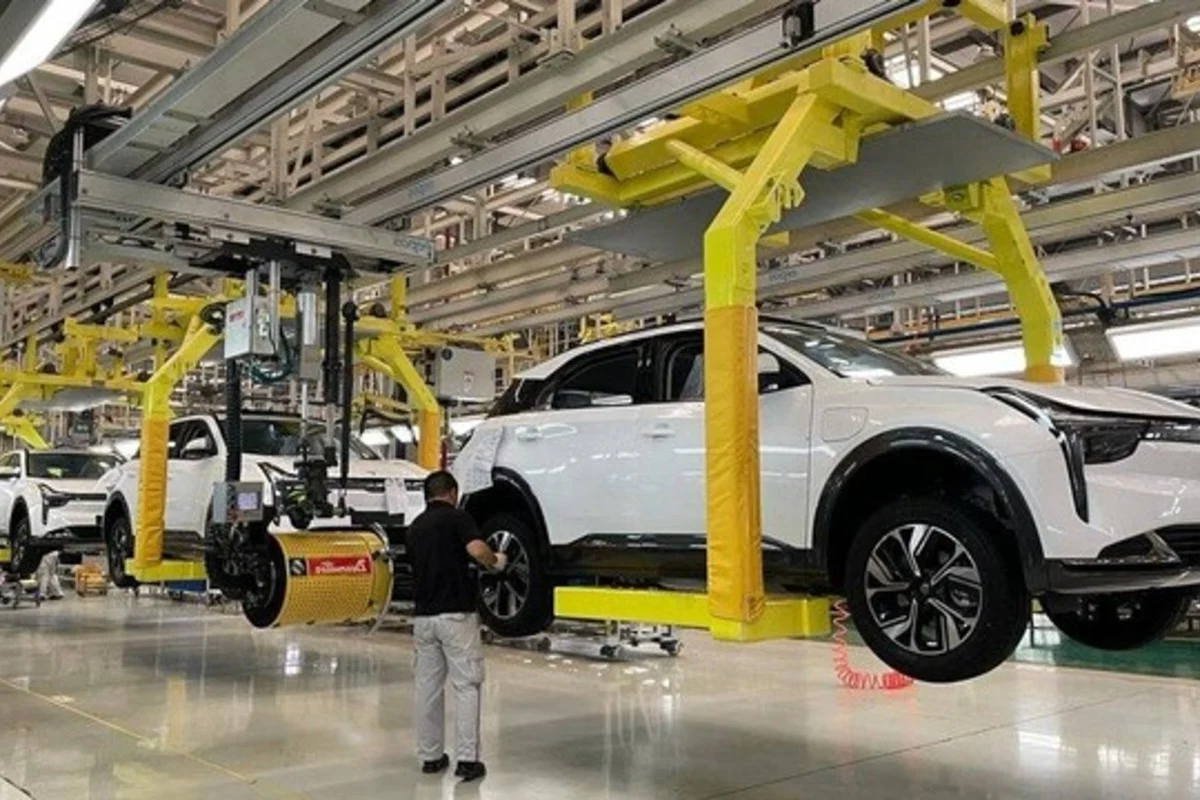
Suara Pecari – 16 April 2026 | Japanese car manufacturers are confronting a pivotal market squeeze as Indonesian buyers increasingly prefer fully electric vehicles produced by Chinese brands, while most Japanese firms continue to emphasize hybrid and conventional gasoline models.
The shift is evident in sales data showing that more than 60 % of electric vehicles on Indonesian roads are imported from China, according to research from the National Center for Sustainable Transportation at ITB.
The Chinese dominance has forced several Japanese dealer networks in major cities to suspend operations, with closures reported in Jakarta’s Pondok Pinang and Halim districts and in other urban centers such as Surabaya and Bandung.
Agus Purwadi, a senior researcher at ITB, explained that the influx of complete-built‑up (CBU) Chinese EVs compresses market share for early‑entry Japanese players and creates supply‑chain disadvantages.
He added that the same pattern is observable in Thailand, where Chinese EVs have eroded domestic automotive production and led to factory shutdowns.
Despite the global trend, internal‑combustion‑engine (ICE) vehicle sales are unlikely to collapse immediately, provided manufacturers manage a differentiated transition pace tailored to local demand.
Tri Mulyono, head of Marketing at Astra International’s Daihatsu division, noted that the first quarter of 2026 showed stagnant overall car sales, a slowdown driven by weakened purchasing power among lower‑mid‑income consumers and tighter credit policies from lenders.
He said rising global oil prices, spurred by the Middle‑East conflict, have accelerated consumer interest in electric mobility, further pressuring conventional Japanese models.
In response, Daihatsu plans to deepen partnerships with financing institutions to offer more flexible loan schemes and to introduce trade‑in programs aimed at retaining price‑sensitive buyers.
Honda’s Indonesian subsidiary also disclosed dealer closures, but CEO Yusak Billy emphasized a shift toward improving service quality and expanding distribution coverage rather than sheer outlet numbers.
Billy stated that Honda will reinforce its product portfolio with electrified variants while balancing supply and demand to meet evolving consumer expectations.
Analysts observe that India and Vietnam are building robust domestic EV manufacturing ecosystems supported by clear policy frameworks, a contrast to Japan’s reliance on legacy technologies.
Indonesia, rich in nickel resources, holds significant potential to become a regional battery and EV hub, yet current utilization of local raw material and automotive capacity remains suboptimal.
Experts suggest that targeted fiscal incentives, such as tax adjustments for battery production and EV purchases, could catalyze market growth and help Japanese firms regain competitiveness.
The combined effect of declining consumer spending, aggressive Chinese pricing, and geopolitical uncertainties is reshaping Indonesia’s automotive landscape, compelling Japanese automakers to accelerate electrification strategies while safeguarding existing market segments.







Tinggalkan Balasan
Anda harus masuk untuk berkomentar.