
WNI di Tehran Menghadapi Ketegangan Menjelang Gencatan Senjata AS-Iran

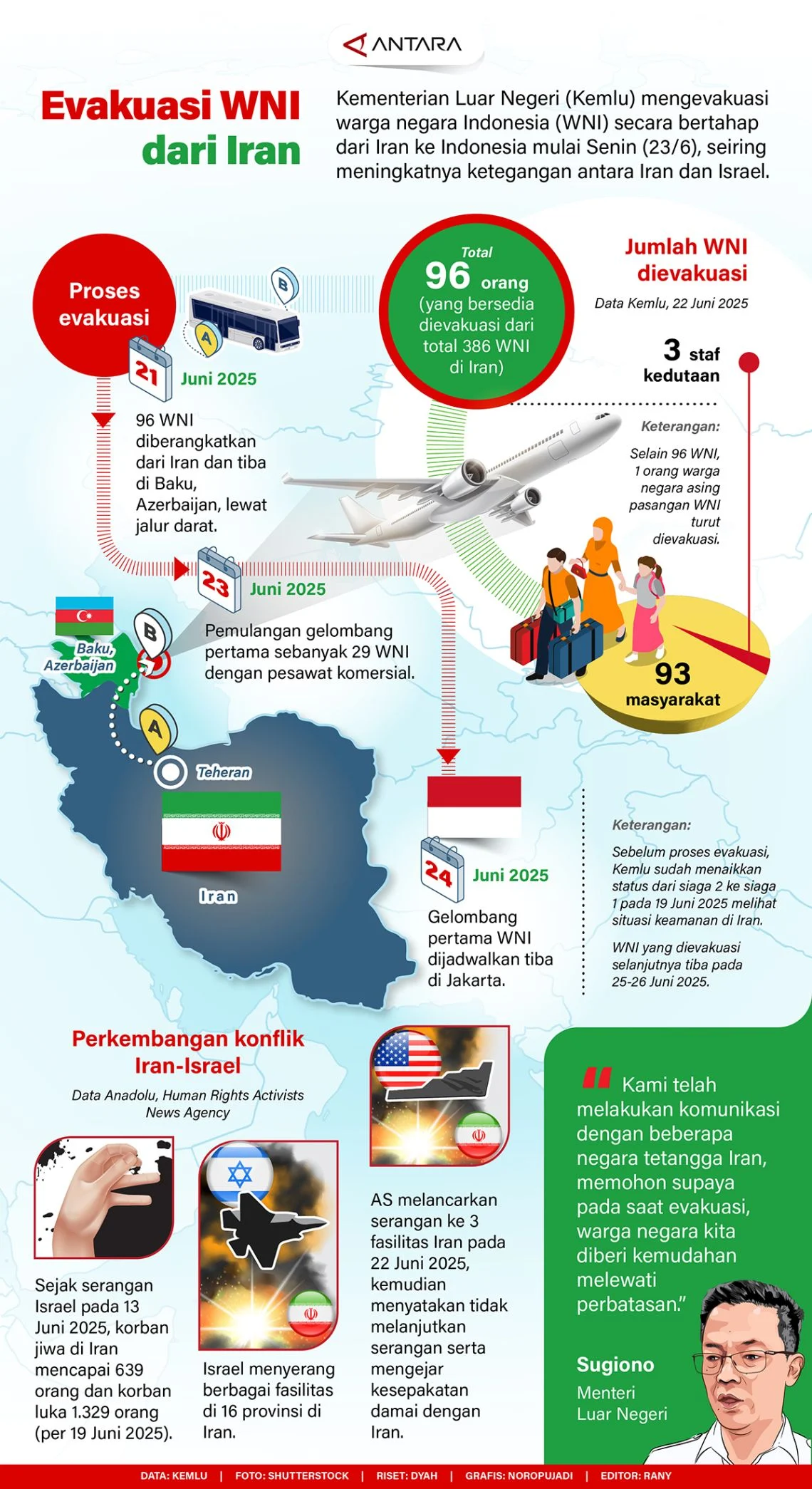
Suara Pecari – 21 April 2026 | Indonesian citizens in Tehran are monitoring developments as the United States and Iran move toward a cease‑fire. The atmosphere in the capital remains tense but daily life continues.
The Indonesian Embassy confirmed that 42 nationals are currently in the city, most of them students and business travelers. Consular staff have increased monitoring and are ready to assist if the situation deteriorates.
Recent statements by former US President Donald Trump claim a regime change in Tehran, alleging that senior leaders have been eliminated. Analysts reject the claim, noting that no institutional collapse has occurred.
Experts point out that a genuine regime change requires the collapse of the security apparatus, a mass popular uprising, and the formation of a new legitimate authority. None of these criteria are met in Iran today.
The Iranian Revolutionary Guard Corps and Basij remain cohesive, and the clerical hierarchy quickly appointed successors after the death of senior figures. This continuity undermines any narrative of a sudden power shift.
In Tehran, traffic flows around occasional security checkpoints, and markets stay open despite sporadic sirens. Residents report that essential services such as electricity and water are uninterrupted.
Indonesian students at the University of Tehran have been advised to avoid large gatherings and to keep their passports updated. The embassy has set up a 24‑hour hotline for emergency assistance.
The prospect of a cease‑fire has eased some anxiety among expatriates, who fear escalation could disrupt travel and commerce. Trade routes through the Strait of Hormuz remain a strategic concern for Indonesia’s energy imports.
Iranian authorities have increased patrols around diplomatic missions, citing the need to protect foreign nationals. No incidents involving Indonesian citizens have been reported so far.
A senior official of the Indonesian Ministry of Foreign Affairs, speaking on condition of anonymity, said the government is in constant contact with Tehran’s officials. “We are prepared to evacuate if the security environment deteriorates sharply,” he added.
The broader regional context includes ongoing negotiations in Islamabad for a second round of talks between the US and Iran. Observers note that the outcome will influence the security calculus for foreign workers in Iran.
Analysts from think tanks warn that any misstep could trigger retaliatory attacks on infrastructure, which historically has rallied Iranian public opinion around the flag. Such dynamics could further isolate foreign communities.
Despite the rhetoric, daily life for most WNI in Tehran is marked by routine activities such as attending classes, working in offices, or visiting family. Social media groups share real‑time updates on traffic and safety alerts.
The Indonesian community has organized informal meet‑ups to discuss contingency plans, including routes to the airport and safe houses. Participation remains voluntary and limited to those who feel at risk.
Local Iranian media report that the government is focusing on maintaining internal stability rather than confronting external pressure. This stance aligns with Tehran’s emphasis on sovereign control over the Hormuz corridor.
The cease‑fire talks, if successful, could open a window for the resumption of normal diplomatic and commercial exchanges. Indonesian exporters of textiles and agricultural products hope for a stable environment.
Conversely, a collapse of negotiations could see renewed sanctions, which may affect the ability of Indonesians to obtain visas or conduct business. The embassy warned that visa processing times could lengthen.
For now, the Indonesian diplomatic mission urges citizens to stay informed through official channels and avoid speculation. “Accurate information is the best defense against panic,” the embassy’s spokesperson reiterated.
The situation in Tehran remains fluid, but the combined efforts of the Indonesian Embassy and local community appear to mitigate immediate risks. Observers rate the overall threat level as moderate.
As the world watches the US‑Iran cease‑fire dialogue, Indonesian citizens in Iran continue their ordinary routines while staying prepared for any rapid change. The government pledges to safeguard its nationals until the conflict fully subsides.







Tinggalkan Balasan
Anda harus masuk untuk berkomentar.