
Banyuwangi Perkuat Peran Perempuan dalam Pembangunan lewat Rembuk Hari Kartini

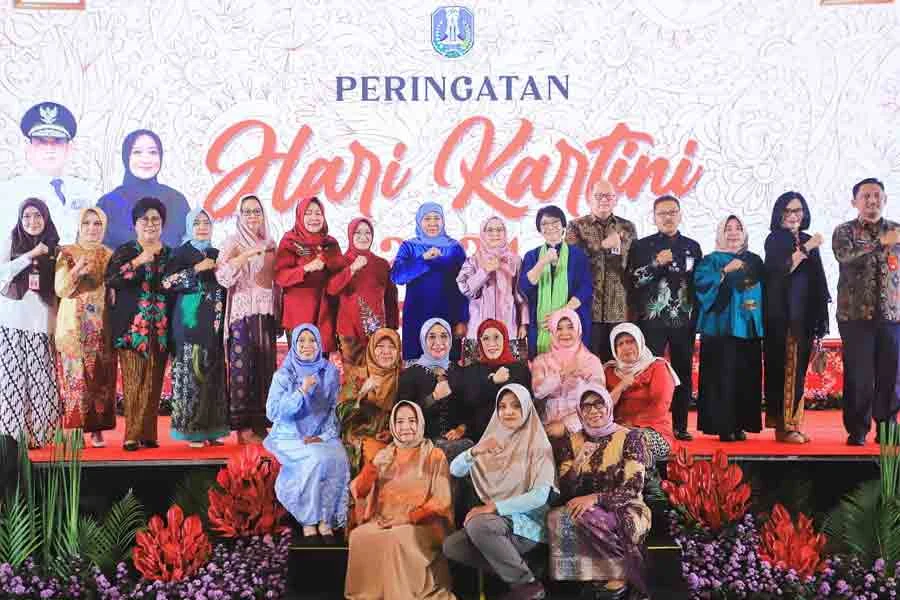
Suara Pecari – 22 April 2026 | Government of Banyuwangi commemorated Kartini Day on 21 April by convening a women’s deliberation rather than typical batik and kebaya displays. The forum gathered representatives from diverse sectors to discuss how to embed women’s participation in regional development.
The meeting took place in Aula Minak Jinggo of the regency’s office and attracted dozens of participants, including members of PKK, Islamic Aisyiyah, Muslimat NU, as well as Catholic, Hindu, and Buddhist women’s groups. Officials from village leadership, midwives, literacy activists, entrepreneurs, and social workers also attended.
Regent Ipuk emphasized that sustainable progress cannot be achieved without active involvement of women. He reiterated Kartini’s vision of equal education, opportunity, and dignity for women and children.
According to Ipuk, women contribute not only to household welfare but also to the economy, education, health, culture, and governance. The deliberation aimed to capture women’s voices, translate aspirations into concrete policies, and foster inclusive planning.
Planning Bureau head Suyanto Waspotondo explained that the forum was divided into four thematic groups: digital literacy, mental health, women’s empowerment, and creative business and economy. Each group received facilitation and was tasked with formulating recommendations for the regency’s development agenda.
Prior to the discussion, participants visited various government departments to gather insights and data relevant to their themes. The field visits enabled them to identify gaps and propose realistic interventions.
In the digital literacy group, Zulfi Zumala from the Indonesian Women’s Ulama Congress advocated for training programs targeting children and parents on safe internet use. She also called for a dedicated helpline to report digital harassment and a multi‑stakeholder approach to mitigate online violence.
Zulfi further suggested that women’s productivity could be enhanced by improving social‑media skills, offering financial literacy workshops, and providing cybersecurity training. Such measures, she argued, would empower women entrepreneurs to expand their market reach.
The health‑focused group highlighted the need for stronger mental‑health services for women and children, proposing a regional hotline and community‑based counseling. They also stressed the importance of integrating mental‑health screening into primary health centers.
Representatives from the women’s economic empowerment cluster promoted the “Kanggo Riko” program, which supports female heads of households in starting micro‑enterprises. They recommended scaling the initiative and linking participants with credit facilities.
Creative economy participants discussed workshops on digital design, handicraft marketing, and tourism‑related products. They argued that leveraging Banyuwangi’s cultural assets could generate new income streams for women artisans.
The deliberation also addressed gender‑responsive budgeting, urging the regency to allocate more funds to women‑centered projects. Participants asked for transparent monitoring mechanisms to track the impact of allocated resources.
Women leaders from religious organizations emphasized the role of faith‑based groups in promoting gender equity and community education. They pledged to mobilize their networks for awareness campaigns on women’s rights.
The forum concluded with a consensus that collaborative effort between government, civil society, and the private sector is essential for achieving the stated goals. A joint action plan will be drafted and presented to the regional council within the next month.
Ipuk reiterated his commitment to institutionalize women’s participation in all stages of planning, implementation, and evaluation of development projects. He warned that without continuous engagement, policy intentions may remain symbolic.
The event reflects Banyuwangi’s broader strategy to position itself as a progressive region that honors Kartini’s legacy while adapting to contemporary challenges. The administration aims to translate symbolic gestures into measurable outcomes.
Local NGOs welcomed the inclusive approach, noting that previous initiatives often lacked genuine consultation with grassroots women. They view the current forum as a step toward more participatory governance.
Analysts observe that the focus on digital literacy aligns with national priorities to bridge the technology gap in rural areas. Enhancing women’s digital skills could also support the regency’s ambition to become a smart tourism destination.
The deliberation’s recommendations will be integrated into Banyuwangi’s 2025 Regional Development Plan, influencing sectors such as education, health, and economic diversification. The plan will undergo public review before final approval.
As the Kartini Day celebrations end, the momentum generated by the women’s forum is expected to sustain advocacy for gender‑inclusive policies throughout the year. Banyuwangi hopes that empowered women will become catalysts for broader social and economic transformation.





Tinggalkan Balasan
Anda harus masuk untuk berkomentar.